
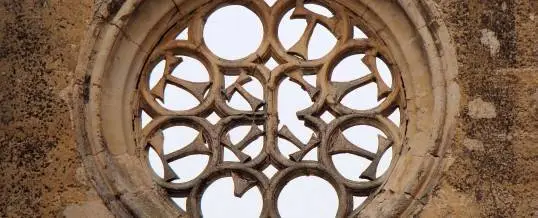
Updated September 18, 2026: This article was substantially revised to clarify the biblical background of the Tau, its use by Saint Francis, and why Christians should not treat it as a magical charm.
The Tau cross is one of the most recognizable Franciscan signs. Saint Francis of Assisi used it frequently in his writings and blessings, not as a decoration or talisman, but as a compact profession of faith in the saving Cross of Jesus Christ.
What is the Tau cross?
Tau is the name of the Greek letter T (Τ or τ). It is also related to taw or tav, the final letter of the Hebrew alphabet. In some ancient forms, the letter resembled a simple cross. Christians therefore came to see the Tau as a fitting sign of the Cross and of belonging to God.
The biblical background is Ezekiel 9:4, where the Lord commands that a mark be placed on the foreheads of those who grieve over Jerusalem’s sins. The Latin Vulgate calls that mark a thau. Christian tradition read this sign in the light of Christ’s Cross, but modern Bible translations commonly render the word simply as “mark.”
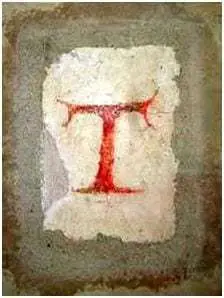
Why did Saint Francis use the Tau?
Francis loved the Cross because it revealed the humility and self-giving love of Christ. The Tau’s cross-like shape gave him a simple way to express conversion, penance, blessing, and hope in salvation. Early Franciscan sources describe his devotion to the sign, and surviving writings show that he placed it with his own hand.
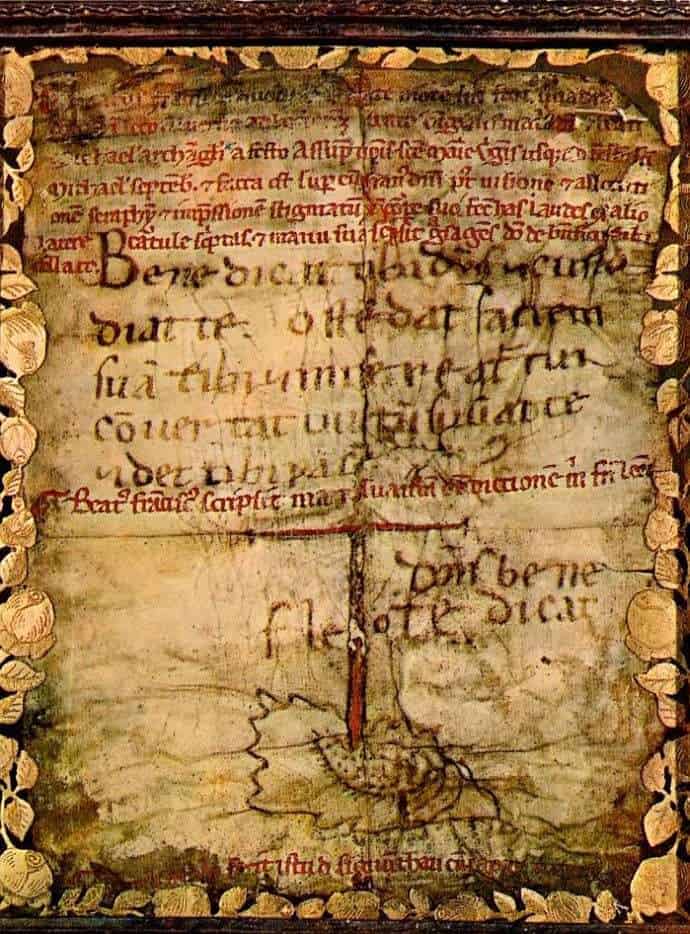
The best-known example is the blessing Francis wrote for Brother Leo at Mount La Verna in 1224. On the surviving parchment, Francis wrote praises of God and the priestly blessing from Numbers 6:24–26. Brother Leo’s own note identifies the writing and the Tau as Francis’s work. A summary and image of this document are available from Franciscan Schools Australia.
Below is the Blessing of Brother Leo written in Saint Francis’s own hand and marked with the Tau.
Is the Tau a sign of protection?
The Tau can rightly remind a Christian of God’s saving care and the victory of Christ over sin and death. But it is not an amulet, and wearing one does not guarantee freedom from suffering, temptation, illness, or misfortune. Christian protection comes from God; the wooden sign calls the wearer to faith, repentance, prayer, and a life shaped by the Gospel.
To wear the Tau responsibly is to accept a question: does my life bear the shape of the Cross? Francis’s sign points toward humility rather than status, service rather than self-importance, and peace rather than domination.
Living what the Tau signifies
For a Franciscan—or any Christian—the Tau can be a daily reminder to:
- begin again through conversion and the Sacrament of Reconciliation;
- receive Christ reverently in the Holy Eucharist;
- serve the poor, the sick, and those whom society overlooks;
- make peace without compromising truth;
- carry one’s cross with trust in the risen Lord.
The value of the Tau is not in the material from which it is made. Its value lies in the mystery it signifies: Jesus Christ loved us to the end and transformed the instrument of execution into the sign of redemption.
Explore more of this spirituality in our collection of Prayers by Saint Francis of Assisi and our introduction to the Franciscan pillar of our life.