
Updated September 18, 2026: This article was substantially revised to correct unsafe claims about eating or using the plant medicinally and to distinguish botanical facts from Christian symbolism.
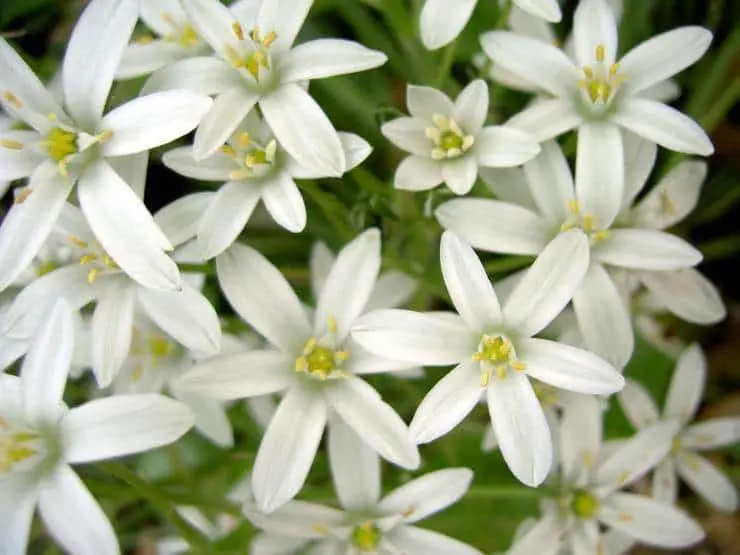
The Star of Bethlehem flower is beautiful enough to invite a spiritual reflection: six white petals open into the shape of a star, calling to mind the star that led the Magi to the Christ Child. Yet a Christian appreciation of creation should begin with truth. This plant is not bread, medicine, or a harmless edible flower.
What is the Star of Bethlehem flower?
“Star of Bethlehem” is a common name used for plants in the genus Ornithogalum. The plant most often meant in North America is Ornithogalum umbellatum, a bulb-forming perennial with white, star-shaped flowers. It is native to Europe and the Mediterranean region and has spread far beyond its original range.
The plant can multiply vigorously through its bulbs. In gardens it may outcompete nearby plants, and in some places it is treated as invasive or noxious. That persistence can be impressive, but it also means gardeners should learn their local guidance before planting it.
Is the Star of Bethlehem flower edible?
No. Do not eat the bulbs, leaves, or flowers, and do not bake them into bread. North Carolina State Extension lists Ornithogalum umbellatum as poisonous to people and cattle. Its toxic compounds include saponins, and ingestion can cause serious digestive symptoms. Contact with the plant may also irritate the skin.
Keep the plant away from children, pets, and livestock. If ingestion is suspected, contact a poison-control service, physician, veterinarian, or animal poison-control service promptly. A folk practice or an old Internet claim is not a safe substitute for medical or botanical guidance.
A Christian symbol—not a biblical plant
Scripture does not identify a flower called the Star of Bethlehem, nor does it connect this species with the Nativity. The name comes from the flower’s star-like appearance. Christians may still receive it as a reminder of the star in Matthew 2, but that is a devotional association, not a claim that the plant appears in the Bible.
Bethlehem’s Hebrew name is traditionally heard as “house of bread.” That meaning naturally turns a Christian’s thoughts toward Jesus, born in Bethlehem and later revealing himself as the Bread of Life in John 6. The connection is spiritual: the true Bread from heaven is Christ himself. We should not turn that beautiful Eucharistic meditation into a false claim that a toxic flower is food.
Seeing creation truthfully
Creation can lift the heart to God without becoming a collection of exaggerated claims. The white flower can suggest purity, the star can recall the Magi’s pilgrimage, and its opening toward the light can remind us to seek Christ. Its toxicity also teaches a humbler lesson: beauty deserves wonder, but wonder should be joined to prudence.
For another reflection on the mystery of the Lord’s birth, read Christmastide: What Is It?
A short prayer: Lord Jesus, Light of the nations and Bread of Life, lead us through the beauty of creation to worship you in truth. Give us grateful hearts, prudent minds, and the faith to follow where you lead. Amen.